
Lishi Lock Picks for Residential Locks
Lishi 2-in-1 picks
Pick the lock and read its key with one tool
Schlage, Kwikset and American Lock tools that pick the lock, then read its key. Find your Lishi.
- Free US shipping over $49
- Genuine Original Lishi
- 4.5★ from 11,800+ reviews
- 100,000+ customers

Start with a Lishi
-
 Schlage front doors, 5 pins
Lishi SC1 Schlage 5-Pin Pick and Decoder
$39.99
Shop the SC1
-
 Kwikset front doors, 5 pins
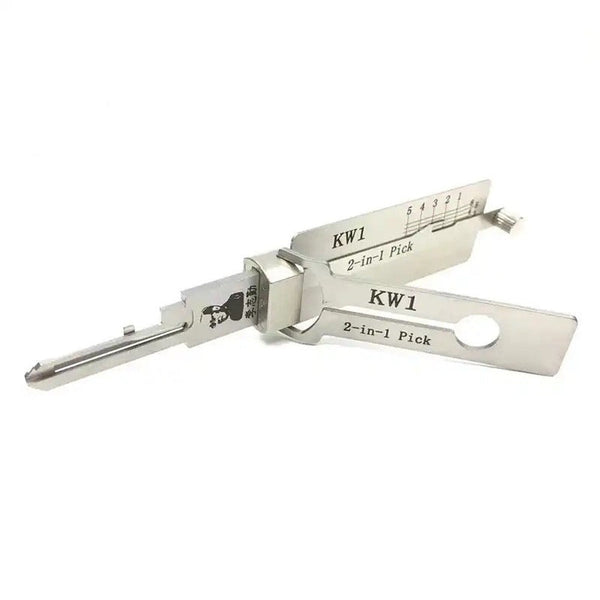
Lishi KW1 Kwikset 5-Pin Pick and Decoder
$42.99
Shop the KW1
-
 Kwikset doors, 6 pins
Lishi KW5 Kwikset 6-Pin Pick and Decoder
$42.99
Shop the KW5
-
 Kwikset and Schlage in one box
Lishi Residential Small Pack: 2-in-1 Lock Pick Set for Kwikset KW1, KW5 and Schlage SC1 (3 Tools)
$106.99
Shop the Small Pack


Lishi Residential Large Pack: 2-in-1 Lock Pick Set for Kwikset, Schlage and American Lock (6 Tools)
Get all 6 Residential Lishis in a Pack
$219.99$259.94Unit price /Unavailable


Lishi KW1 Kwikset 5-Pin Pick and Decoder
$42.99Unit price /Unavailable

Lishi KW5 Kwikset 6-Pin Pick and Decoder
Lishi for Kwikset Locks (KW5 profiles)
$42.99Unit price /Unavailable


Lishi Residential Mid Pack: 2-in-1 Lock Pick Set for Kwikset, Schlage and American Lock (5 Tools)
$179.99$211.95Unit price /Unavailable

Lishi Residential Small Pack: 2-in-1 Lock Pick Set for Kwikset KW1, KW5 and Schlage SC1 (3 Tools)
$106.99$125.97Unit price /Unavailable


Your next step
What are you opening?
-
Front door lock
Check the key brand and count the cuts. Five cuts on a Schlage key takes the SC1, six takes the SC4. Kwikset works the same way with the KW1 and KW5.
-
Several locks to cover
The Small Pack puts the KW1, KW5 and SC1 in one box, so 5 and 6-pin Kwikset and 5-pin Schlage C doors are all covered.
-
Six cuts on the key?
A 6-pin lock takes the KW5 on Kwikset or the SC4 on Schlage C, and either one also works a 5-pin lock on the same keyway with a spacer.
-
New to picking?
A Lishi feels natural once you know how pins and tension behave. Start with a beginner set and clear practice locks, then add the Lishi for the locks you meet most.
Why a Lishi
One tool that picks, decodes and teaches you the lock
A pick and tension wrench open the lock. A Lishi opens it and then tells you how the key is cut, because the grid on the blade shows where every pin set. Match it to your keyway and it sits right on the pins from the first try.
Pick and decode in one
Lift each pin to the shear line, open the lock, then read the cut depths straight off the grid on the blade.
Made for one keyway
Each Lishi slides into the keyway it is named for, so the arms land on the pins instead of fighting the warding.
No separate tension wrench
The 2-in-1 tensions the plug itself, so you hold one tool and feel every pin set through it.
Shop Lishi and Lishi-style 2-in-1 picks and decoders for common residential and pin-cylinder profiles, including Schlage SC1, SC4 and SC20, Kwikset KW1 and KW5, Yale rim and Yale Euro, plus AM5 for American Lock padlocks. Match the tool to the exact keyway before you buy; these are guided picking and decoding tools made for specific lock profiles.
New to Lishi tools? Pair the correct keyway with our Beginners Visual Guide for clear picking fundamentals, pin feedback, and decoding practice.
Residential Lishi tools
Choose by keyway first: Schlage, Kwikset or American Lock
A Lishi residential lock pick is a keyway-specific 2-in-1 pick and decoder for pin tumbler cylinders. These tools are not universal picks: they work best when the tool, keyway profile, and pin count match the lock in front of you.
- Schlage: the SC1 and SC4 for the five-pin and six-pin C keyway on most Schlage house locks, and the SC20 for master-keyed buildings, because its L profile enters the whole Classic family.
- Kwikset: the KW1 for the common five-pin Kwikset lock, and the KW5 for six-pin locks on the same keyway.
- American Lock AM5: a 2-in-1 pick and decoder for compatible AM3, AM5, and AM7 padlock keyways.
One tool, two pin counts. A six-pin Lishi (KW5, SC4 or SC20) also works five-pin locks on the same keyway with a small spacer at the face of the lock, so if you meet both, the six-pin tool covers more doors. If every lock you work is five-pin, the KW1 or SC1 sits at the right depth straight out of the packet.
New to guided picking? Pair the correct keyway tool with the Beginners Visual Guide to build pin feedback, tension control, and decoding confidence.
New to Lishi? See how a Lishi works, with a 3D model that shows the pins moving inside the lock.
Last updated:
Residential Lishi picks at a glance
Start with the lock's keyway and count the cuts on the key. Schlage, Kwikset and American Lock tools each follow a specific profile and pin layout.
| Tool | Keyway / profile | Lock family | Pins | Best fit |
|---|---|---|---|---|
| Lishi SC1 | Schlage C | Schlage residential | 5-pin | The common five-pin Schlage house lock |
| Lishi SC4 | Schlage C | Schlage residential | 6-pin (5 with a spacer) | Six-pin Schlage C cylinders and training locks |
| Lishi SC20 | Schlage L, all-section | Schlage Classic family | 6-pin (5 with a spacer) | Every Classic keyway from C to G plus H, J, K and L: one tool for master-keyed buildings |
| Lishi KW1 | Kwikset KW1 | Kwikset residential | 5-pin | Common Kwikset KW1 cylinders and starter practice |
| Lishi KW5 | Kwikset KW1 keyway | Kwikset residential | 6-pin (5 with a spacer) | Six-pin Kwikset cylinders on the common keyway |
| Lishi AM5 | AM3 / AM5 / AM7 | American Lock padlocks | 6-pin | American Lock padlocks using compatible AM keyways |
For fundamentals and visual pin feedback, add the Beginners Visual Guide.
Residential Lishi FAQ
Is a Lishi pick universal?
Is a Lishi pick universal?
Each Lishi is cut for one keyway family, and that is what gives it such clear feedback. A Schlage tool stays in Schlage and a Kwikset tool stays in Kwikset. Within a family it can reach further than you might expect: the SC20 enters every Schlage Classic keyway, and a six-pin tool works five-pin locks with a spacer.
What is the difference between SC1, SC4, and SC20?
What is the difference between SC1, SC4, and SC20?
The SC1 and SC4 are both cut for the Schlage C keyway, the SC1 for five-pin locks and the SC4 for six-pin. The SC20 is cut to the L all-section profile at the top of Schlage's Classic keyway tree, so it enters the C, CE, E, EF, F, FG and G keyways and the H, J, K and L sections. Choose the SC20 for master-keyed buildings, and the SC1 or SC4 when every lock is the C keyway.
Should I choose KW1 or KW5 for Kwikset?
Should I choose KW1 or KW5 for Kwikset?
Both are cut for the common Kwikset keyway. The KW1 is the five-pin tool and the KW5 is the six-pin one. The KW5 also works five-pin locks with a small spacer at the face of the lock, so choose it if you meet both.
Do these tools decode as well as pick?
Do these tools decode as well as pick?
Yes. A 2-in-1 Lishi-style tool combines guided picking with a decoder grid. After the plug turns, the grid helps read pin depths for the matching keyway profile.
Why add the Beginners Visual Guide?
Why add the Beginners Visual Guide?
The Beginners Visual Guide helps new pickers understand pin states, tension, feedback, and what the tool is showing you. It pairs well with Lishi practice because the visual grid makes the learning loop clearer.
Who uses Lishi tools?
Who uses Lishi tools?
Locksmiths, auto technicians and locksport pickers. A Lishi 2-in-1 picks the lock and decodes it in the same tool, so you finish with the key cuts as well as an open lock.