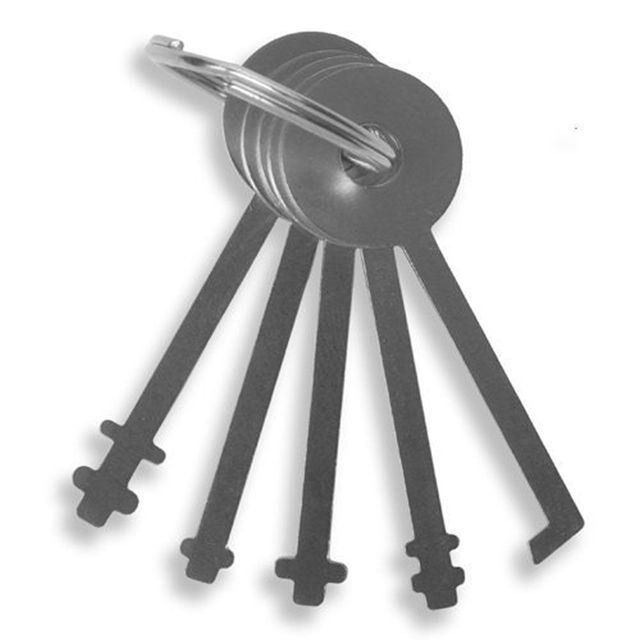
Warded Lock Pick Set - for Lockers, Padlocks, Cabinets + more

Warded Lock Pick Set - for Lockers, Padlocks, Cabinets + more
Warded Lock Pick Set - for Lockers, Padlocks, Cabinets + more is backordered and will ship as soon as it is back in stock.
FREE Basic Lock Pick Guide
FREE Basic Lock Pick Guide
Our short 30-page How to Pick Locks PDF online guide will be sent to you free after you purchase any lock pick set.
We do have 2 amazing real book upgrades customers love:
1. Illustrated 60 page Lock Picking Glossy Guide Booklet
2. Definitive 180 page Full Colour Visual Guide Book for all Lock Pickers
About this Item
About this Item
Description
Description
Warded lock picks for lockers, padlocks and cabinets
Warded locks do not use pin stacks. They block the key with fixed metal walls called wards, and the right key slips past them to turn the bolt. These warded lock picks copy that key shape so you can pass the wards and turn the mechanism without the original key. They are the simple, direct tool for the older padlocks, lockers, and office cabinets you meet all the time.

It is about the path, not the pins
Inside a warded lock there is no shear line to set. The keyway has raised walls, the wards, and a correct key has cuts that thread between them to reach the bolt and turn it. A normal hook and tensioner have nothing to lift here, which is why warded locks ignore a standard pick set. A warded pick is shaped like a skeleton of the key: it clears the wards and engages the turning lug directly.
You will find this mechanism in many older padlocks, lockers, desk and cabinet locks, and simple utility hardware. There are millions of them still in service, and a warded set makes short work of the common patterns.
Insert, clear the wards, turn the bolt
It is a straightforward technique, and it is a good early win because the feedback is obvious: either the profile clears and turns, or you try the next pattern. Older and weathered locks can take a little patient wriggling, so let the lock guide you rather than muscling it.
The right simple tool for a lock that needs no pin picking
Several patterns
Different profiles in one set so you can match the keyway instead of fighting it with the wrong shape.
Steel that holds up
Built to take the twisting and wriggling that opening older and weathered warded locks demands.
One clear job
No tension hand, no shear line to read. Match the profile and turn, and the lock opens like it does with a key.
Fills a kit gap
Covers a whole lock family your hooks and rakes cannot touch, so your kit answers more of what walks in the door.
What to know before you buy
| Brand | LockPickWorld |
| Type | Warded lock pick set |
| Mechanism | Warded locks (key clears fixed wards to turn the bolt) |
| Profiles | Several shaped patterns for common warded keyways |
| Material | Steel, built for the twisting force of opening warded locks |
| Best for | Older padlocks, lockers, desk and cabinet locks, simple utility hardware |
Round out your light-lock coverage
Wafer Lock Rakes
Wafer locks are another simple family found in cabinets, lockers and cars. These rakes add fast coverage your warded picks do not reach.
Tension Tool Set
When you move on to pin tumbler locks, a range of tensioner styles is the first thing you will want beside your picks.
Beginners Visual Guide
Builds the mental picture of how each lock family works so warded, wafer and pin tumbler all start to make sense.
Quick answers from the LockPickWorld bench
How do you pick a warded lock without a key?
You use a warded pick shaped like the key. Slide it past the fixed wards inside the keyway, then turn it to catch the bolt and rotate it open. No tension tool or shear line reading is involved.
What locks does this work on?
Warded locks: many older padlocks, lockers, desk and office cabinet locks, and simple utility hardware. For pin tumbler locks, reach for a hook and tensioner instead, and for wafer locks add the linked wafer rakes.
Is this beginner friendly?
Yes. Warded picking is one of the more direct techniques to learn because the feedback is obvious. Match a profile, thread it past the wards, and turn. Work on a lock you own first.
Why are these made of steel?
Warded picks take real twisting and wriggling, especially on older or weathered locks. Steel lets the profiles keep their shape under that turning force instead of flexing or bending.
Open the warded locks your other picks ignore
Match the profile, clear the wards, and turn. These warded picks are the simple, steel-built answer for the older padlocks, lockers and cabinets that pin picks were never made for.