
Cerraduras de práctica
Practice locks
Practice locks that show your fingers what the pins are doing
Pick the same lock again and again, watch every pin stack set at the shear line, then turn it away and do it by feel. Start on a clear lock, step up to spool and serrated pins, and re-pin for a harder challenge whenever you're ready.
- Free US shipping over $49
- Clear, cutaway and re-pinnable
- Standard, spool and serrated pins
- 4.5★ from 11,800+ reviews
- 100,000+ customers

Start with a practice lock
-
 Three locks, easy to hard
Juego de candados de práctica Dangerfield EUREKA, 3 candados progresivos
$49.99
Shop Eureka
-
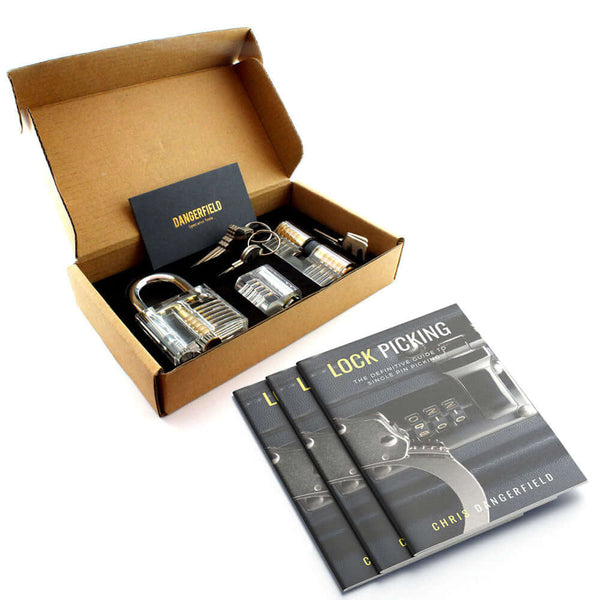 Add the how-to booklet
Caja de práctica de cerraduras y folleto práctico de cómo abrirlas - Fundamentos
$61.99
Shop the Essentials pack
-
 Re-pin a mortise lock
Dangerfield Repinnable Practice Lock Kit + Pins, Springs, Stoppers, Hex Allen Key
$47.99
Shop the mortise kit
-
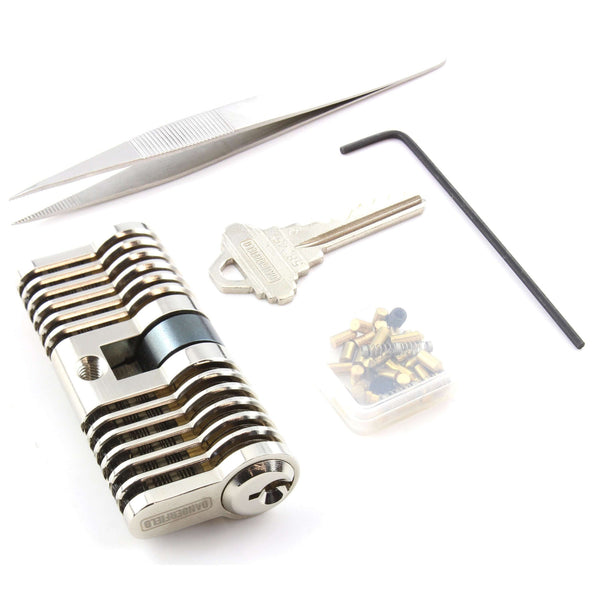 Step up to a Euro cutaway
Candado de práctica, repintable, de aluminio macizo, recortable, de Dangerfield
$69.99
Shop the Euro cutaway


Dangerfield Repinnable Practice Lock Set: Aluminum Cutaway + Mortise Kit
$105.99$117.98Precio unitario /Agotado
 Video
Dangerfield Repinnable Practice Lock Kit + Pins, Springs, Stoppers, Hex Allen Key
Infinite Practice Lock & Kit
$47.99Precio unitario /Agotado

Candado de práctica, repintable, de aluminio macizo, recortable, de Dangerfield
Cerradura de aluminio para uso aeroespacial
$69.99Precio unitario /Agotado

Juego de candados de práctica Dangerfield EUREKA, 3 candados progresivos
Pasa de principiante a profesional rápidamente
$49.99Precio unitario /Agotado

Caja de práctica de cerraduras y folleto práctico de cómo abrirlas - Fundamentos
$61.99Precio unitario /Agotado


Movimientos de pines visibles
Desde $54.99Precio unitario /Agotado

Candado de práctica - Dangerfield Infinitus Repinnable Cutaway y pinzas
$49.99$59.95Precio unitario /Agotado

Candado de práctica de acrílico transparente Dangerfield - Pines estándar - Dificultad media
$19.99$29.99Precio unitario /Agotado
 $17.99
$18.99Precio unitario /Agotado

Cerradura de entrenamiento transparente de doble cara: práctica de selección de un solo pasador
$17.99$19.99Precio unitario /Agotado

Candado de práctica con disco transparente - Candado acrílico transparente con llave
$17.99Precio unitario /Agotado


Práctica de cerradura de cilindro con pasador (tolerancias sencillas, ideal para principiantes)
$16.99$17.99Precio unitario /Agotado
 $26.99
$29.99Precio unitario /Agotado

Portacerraduras de práctica Centurion V2 de Multipick Professional
$114.99Precio unitario /Agotado


Your next step
What do you want to do next?
-
Watch the pins move
A clear body shows every pin stack lift and set while you pick, so you can match what your fingers feel with what the pins are doing.
-
Meet security pins
Spool and serrated pins give you false sets and counter-rotation. The Eureka set puts them in order, so each new feel arrives one at a time.
-
Build your own challenge
Re-pinnable locks let you swap pins, springs and stoppers and drop in security pins, so one lock keeps teaching you for years.
-
Need picks too?
A practice lock is the target. You still need picks and a tension tool to work it, and the Lokko Beginners Box puts picks, tensioners and practice locks in one box.
-
Learn what you're feeling
The Beginners Visual Guide shows tension, pin feedback and false sets in 200+ color illustrations, so every session on the lock means more.
-
See it, then pick it blind
Two Dangerfield re-pinnable locks in one set: an aluminum cutaway to watch the pins, and a mortise lock that takes the window away.
Why practice locks
Every lock you open starts on a practice lock
Most first time frustration comes from not knowing what the pins are doing. A practice lock fixes that. You can pick it over and over, see the mechanism, and add difficulty only when you're ready.
See what your fingers feel
Clear and cutaway bodies show the pin stacks, so you learn the feel of a set pin faster than you would on a solid lock.
Harder pins in a sensible order
Move from standard pins to spools and serrated pins one step at a time, so false sets make sense when you meet them.
One lock, years of practice
Re-pinnable locks let you change the pins and raise the difficulty, so the lock grows with your skill.
Cerraduras de práctica para abrir cerraduras
Las cerraduras de práctica son cerraduras especiales con características que aceleran tu aprendizaje. A menudo, podrás ver claramente los pasadores dentro de la cerradura, el mecanismo será más visible y podrás poner a prueba tus habilidades con cerraduras de práctica cada vez más difíciles. Si quieres aprender a abrir cerraduras, ¡una cerradura de práctica te ayudará a mejorar mucho más rápido!
Cerraduras claras
Las cerraduras transparentes suelen ser de plástico transparente y revelan el mecanismo en funcionamiento al insertar la llave en la cerradura y girar el tapón. En las cerraduras de cilindro de pasadores más comunes, verá y comprenderá cómo todos los pasadores se encuentran a la misma altura de la línea de corte, y observará la rotación del mecanismo al abrirse y desbloquearse. ¡Aprenderá a imitar esto con la ganzúa, desentrañando el misterio de cada cerradura de su casa!
Cerraduras recortadas
Las cerraduras recortadas suelen ser cerraduras reales , cortadas por expertos para exponer los pasadores y resortes, lo que permite ver qué sucede al insertar la llave o las ganzúas. Las cerraduras transparentes están completamente formadas, pero, como siempre, permiten ver qué sucede en el interior mientras se aprende a abrir, lo que ayuda a visualizar las acciones y a evaluar los esfuerzos con mayor precisión.
Cerraduras progresivas
Las cerraduras progresivas y metálicas que ofrecemos mejorarán su habilidad para abrir cerraduras mediante la práctica con variedades de nivel intermedio a alto. No hay manera más rápida de comprender el proceso de abrir una cerradura que con una cerradura transparente, una cerradura recortada o una cerradura metálica.
Cómo aprender y mejorar su técnica de ganzúas
Algunas de nuestras cerraduras de práctica no son recortables ni transparentes, sino que ofrecen al usuario una cerradura real más fácil de usar (a menudo con menos pines que una cerradura de cilindro normal de 6 o 7 pines). Mucha gente me pregunta cómo abrir una cerradura, pero yo recomiendo NO abrir cerraduras en uso real a menos que sea absolutamente necesario. Los daños son poco frecuentes, pero una cerradura de práctica le ahorra el riesgo. Aprender la presión y la tensión correctas, empezar a sentir los pines en la cerradura y practicar sujetarla son habilidades importantes que se aprenden con la experiencia.
Si quieres saber cómo abrir una cerradura, este es un buen punto de partida. Una cerradura transparente o de corte y un juego de ganzúas, ¡y listo!
También contamos con excelentes cerraduras de práctica Dimple y cerraduras metálicas de habilidad progresiva. si ¡Te sientes más avanzado!
Preguntas frecuentes sobre juegos de ganzúas
Algunas preguntas frecuentes sobre cómo abrir cerraduras y por qué los juegos de ganzúas son fantásticos:
¿Cómo se practica el forzamiento de cerraduras?
Saber abrir cerraduras es una habilidad subestimada. ¡Nunca se sabe cuándo necesitarás abrir candados! Aquí tienes una guía rápida y sencilla sobre cómo funciona:
Conozca sus herramientas
Identifica las herramientas básicas que necesitarás para abrir cerraduras. Estas son las dos más importantes:
- Llave de tensión/Herramienta de torneado: Una pieza metálica en forma de L. Disponible en diferentes versiones. Consiga una de alta calidad para sacarle el máximo provecho a esta herramienta.
- Ganzúas de palpación: Se utilizan para calibrar los pines dentro de un candado. Para sacar el máximo provecho de esta herramienta, elija una de alta calidad.
Practica con un juego de cerraduras
La razón por la que existen los kits de práctica es para que aprendas esta habilidad de forma segura sin tener que desmontar diferentes cerraduras. Un kit eficiente es aquel que te ofrece una buena variedad de cerraduras para abrir.
¿Cuál es el mejor juego de ganzúas?
El mejor set disponible no solo ofrece herramientas de alta calidad, sino también una gran curva de aprendizaje para desbloquearlas. Aquí tienes tres de nuestros sets más populares de nuestra colección:
Candado de práctica transparente con mecanismo visible: ideal para el entrenamiento de ganzúas.
Abra cerraduras con facilidad y seguridad. La carcasa transparente le permite ver claramente cómo se enganchan los pasadores. ¡También funciona como un candado convencional!
Cerraduras de práctica Dangerfield para ganzúas (juego de tres)
Mejora tu habilidad para abrir cerraduras con este set. Incluye tres niveles de dificultad para ayudarte a desbloquear ciertas configuraciones.
Candado de entrenamiento Lokko Clear Lock Pick azul: dificultad media
Aprende cómo funcionan los portacarretes con este juego. ¡La carcasa transparente te permite ver tu progreso al desbloquear el candado!
New to practice locks?
What is a practice lock, and why start with a clear one?
A practice lock is a lock you can pick over and over without touching one that's protecting anything. It's where you learn to feel each pin and control your tension, and later it's where you meet security pins for the first time.
A clear practice lock has a see-through acrylic body, so you can watch each pin stack lift and set at the shear line while you pick. Seeing that happen connects what your fingers feel with what the pins are doing, and that connection is the hardest thing to learn on a solid lock. Use the clear view to understand the movement first, and then turn the lock away from your eyes and pick it by feel.
- Clear locks have see-through bodies that show the whole pin tumbler mechanism as you pick.
- Cutaway locks are real metal locks with a section machined away, so you can see the pins, springs and chambers.
- Progressive and re-pinnable locks let you swap in harder pins as you improve.
- Dimple practice cylinders have paired top-and-bottom pins, so you can practice dimple lock picking.
If you're starting out, begin with the Clear Double-Sided Practice Lock ($17.99), which is built for single pin picking. When that feels easy, step up to the Dangerfield Eureka set ($49.99). Its three clear locks use standard pins, spool pins and serrated pins, so you meet false sets and counter-rotation in a sensible order. If you don't have any picks yet, the Lokko Beginners Box ($49.99) puts picks, tensioners and practice locks in one box.
Last updated:
Practice locks at a glance
Our practice locks side by side, from the clear trainer you start on to the re-pinnable locks you grow into.
| Lock | Type | Includes | Best for |
|---|---|---|---|
| Clear Double-Sided Practice Lock | Clear, single pin | Clear acrylic body, two sides to pick | Your first lock. Watch each pin set as you pick. |
| Dangerfield Eureka Training | Clear set (3 progressive pins) | Standard Pin, Spool Pin, Serrated Pin locks | Step through pin types in order. Same form, harder pins. |
| Dangerfield Essentials Pack | Bundle | Three practice locks + how-to picking booklet | Locks plus instruction in one box. |
| Dangerfield Repinnable Practice Lock Kit | Re-pinnable mortise | Lock, 30+ pins, springs, stoppers, hex key | Years of practice via re-pinning. Add security pins. |
| Dangerfield Aluminum Brushed Double Re-pinnable | Cutaway aluminum, re-pinnable | Aluminum cutaway, swappable pins, tweezers | Cutaway view plus full re-pinning kit. |
| Dangerfield Cutaway + Mortise Set | Two re-pinnable locks | Aluminum cutaway lock + mortise kit | See it on the cutaway, then pick it blind on the mortise. |
A practice lock is the target. You still need picks and a tension tool to work it. Browse our lock pick sets or read the best lock pick sets buyer guide for starter recommendations.
Practice lock FAQ
What is a practice lock?
What is a practice lock?
A practice lock is a lock designed for picking practice. They expose the pin tumbler mechanism (via a clear plastic body or cutaway construction), let you re-pin to vary difficulty, or both. The goal is controlled, repeatable practice without working on locks that are in use.
Is a clear practice lock worth it?
Is a clear practice lock worth it?
It's worth it, especially in your first few weeks. A clear lock lets you watch a pin bind and set, and you'll see right away when you've lifted one too far. That makes your mistakes much easier to understand. Don't stay dependent on the clear body, though. Once you can open it while you watch, try picking it with the lock facing away from you. The Eureka three-lock set adds spool and serrated pins in clear bodies, so you can see what a false set looks like before you meet one in a solid lock.
What's the difference between clear, cutaway, and progressive practice locks?
What's the difference between clear, cutaway, and progressive practice locks?
A clear lock has a transparent plastic body so you can see the pins set as you pick. A cutaway lock is a real metal lock with portions of the body removed to expose the mechanism. A progressive (or re-pinnable) lock lets you change pin count and type to step up difficulty as your skill grows. Most pickers use all three at different stages.
Do I need a lock pick set as well as a practice lock?
Do I need a lock pick set as well as a practice lock?
Yes. A practice lock is the target. You still need picks and a tension tool to work it. Browse our lock pick sets or read the best lock pick sets buyer guide for starter recommendations.
Are practice locks easier than real locks?
Are practice locks easier than real locks?
Most are tuned to be approachable, with standard pins, low pin counts, and no security pins (spools, serrated). The point is to build feel for single-pin picking and tension control before tackling real locks with anti-pick features.
Which practice lock should I start with?
Which practice lock should I start with?
If you don't have any picks yet, start with the Lokko Beginners Box ($49.99), which gives you picks, tensioners and practice locks together. If you already have picks, the Clear Double-Sided Practice Lock ($17.99) is the cheapest way to see the mechanism at work. The Re-pinnable Practice Lock Kit ($47.99) lets you add pins to make it harder as you improve.
Can I re-pin a practice lock to change difficulty?
Can I re-pin a practice lock to change difficulty?
Yes, with a re-pinnable model. The Aluminum Double Re-pinnable Lock ($69.99) and the Re-pinnable Practice Lock Kit ($47.99) let you swap pins, springs, and stoppers to adjust pin count, add security pins, or change pin heights.
When should I move from practice locks to real locks?
When should I move from practice locks to real locks?
When you can consistently pick a 5-pin standard practice lock single-pin, with intentional tension and pin-by-pin set. A commodity Master padlock or a rim cylinder from a hardware store makes a good next step. Most pickers keep using practice locks alongside real ones to drill specific techniques like security pins or dimple.
Should I get a single hard lock or a progressive set?
Should I get a single hard lock or a progressive set?
A progressive set with multiple locks at increasing difficulty builds skill faster because you practice the same techniques against more challenging targets. The Dangerfield Training Set of Three ($54.99) gives a clear path. A single re-pinnable lock works if you want to grow with one piece of gear that adapts.


