


Ganzúas Lishi
Lishi 2-in-1 picks
Pick the lock and read its key with one tool
Each Lishi is cut for one keyway. It picks the lock, then reads the cuts so you know its key. Find your Lishi.
- Free US shipping over $49
- Genuine Original Lishi
- 4.5★ from 11,800+ reviews
- 100,000+ customers

Start with a Lishi
-
 Schlage front doors, 5 pins
Herramienta 2 en 1 de 5 pines original Lishi Schlage (SC1)
$39.99
Shop the SC1
-
 Kwikset front doors, 5 pins
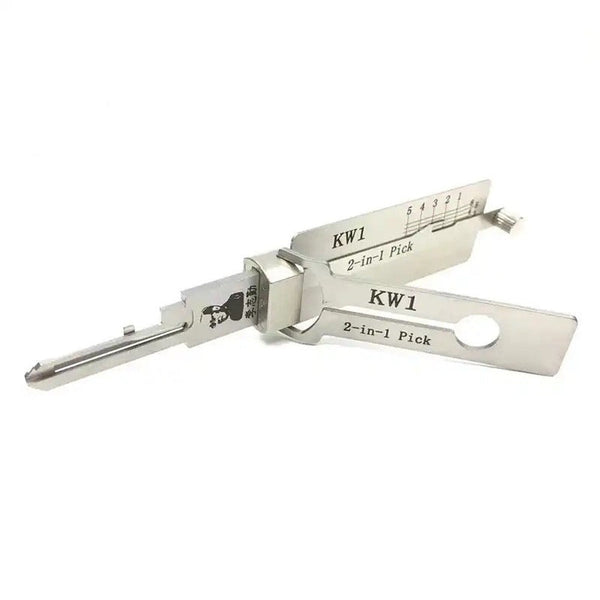
Herramienta 2 en 1 de 5 pines Lishi Kwikset (KW1) original
$42.99
Shop the KW1
-
 Kwikset and Schlage in one box
Lishi Residential Small Pack: 2-in-1 Lock Pick Set for Kwikset KW1, KW5 and Schlage SC1 (3 Tools)
$106.99
Shop the Small Pack
-
 Pick your car keyway
Herramientas de ganzúas Lishi 2 en 1 - Ganzúas Lishi (32 para elegir)
$52.11
Shop car Lishi tools


Lishi Residential Large Pack: 2-in-1 Lock Pick Set for Kwikset, Schlage and American Lock (6 Tools)
Get all 6 Residential Lishis in a Pack
$219.99$259.94Precio unitario /Agotado


Herramientas originales para ganzúas Lishi Kwikset (KW5) de 6 pines, 2 en 1
Lishi for Kwikset Locks (KW5 profiles)
$42.99Precio unitario /Agotado

Herramienta 2 en 1 de 5 pines Lishi Kwikset (KW1) original
$42.99Precio unitario /Agotado

Herramientas de ganzúas Lishi 2 en 1 - Ganzúas Lishi (32 para elegir)
$52.11Precio unitario /Agotado


Lishi Residential Mid Pack: 2-in-1 Lock Pick Set for Kwikset, Schlage and American Lock (5 Tools)
$179.99$211.95Precio unitario /Agotado

Lishi Residential Small Pack: 2-in-1 Lock Pick Set for Kwikset KW1, KW5 and Schlage SC1 (3 Tools)
$106.99$125.97Precio unitario /Agotado


Find your Lishi in three taps
Each tool is made for specific The shaped slot you push the key into. Locks from different brands are often built for the same keyway, and one brand can use several, so match the slot and the key, not the logo. Each Lishi is made for the keyways named on it, so pick the one built for your slot.. Tell us what you're opening and we'll show you the pick and decoder that fits it.
New to Lishi? See how a Lishi works, with a 3D model you can step through.
What are you opening?
Which brand is on the lock?
The brand name is usually stamped on the key head or the face of the lock. Many keys also carry a code such as KW1 or SC1 near the head.
Look straight into your lock. Which slot matches?
Hold the lock with the pins at the top, as it sits in the door.
How many cuts does your key have?
- Hold your key flat with the round head on the left and the bumpy edge on top.
- Each V-shaped dip along that bumpy edge is one cut.
- Count the dips from the head to the tip. We've numbered them on the drawings so you can match yours.
Still unsure? A 6-cut key is a little longer than a 5-cut key of the same brand. Lay yours next to the drawings, or tap Not sure and we'll cover both.
See a small second slot beside the keyhole? That's a Kwikset SmartKey lock, which uses its own rekeying mechanism. The KW1 and KW5 are made for standard Kwikset pin locks.
Which make is the car?
Your Lishi for 5-pin Schlage SC1 house locks
Your Lishi for 6-pin Schlage SC4 house locks
Your Lishi for 5-pin Kwikset KW1 house locks
Your Lishi for 6-pin Kwikset KW5 house locks
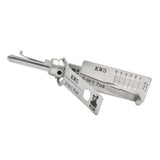
Your Lishi for an American Lock padlock
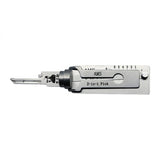
Your Lishi for Kwikset, 5 or 6 pins
Not sure which? Take both, 10% off the second.
The KW1 opens 5-pin Kwikset locks and the KW5 opens 6-pin. Take both and you have the right tool whichever of the two you meet.
Herramienta 2 en 1 de 5 pines Kwikset (KW1) original + Herramientas originales para ganzúas Kwikset (KW5) de 6 pines, 2 en 1 $81.69 $85.98
Your Lishi for Schlage, 5 or 6 pins
Not sure which lock you've got? A Residential Pack covers the common house locks
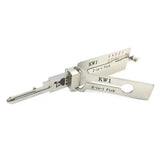
Your Lishis for the whole house
Not sure? Take this pack.
Kwikset and Schlage are the two biggest names in American house locks. This pack covers their two most common keyways, KW1 and SC1, plus the KW5 for 6-pin Kwikset, so you don't have to guess.
Residential Small Pack $106.99 $125.97 (save $18.98)
Rather start with one tool? The KW1 opens 5-pin Kwikset and the SC1 opens 5-pin Schlage.
Your Lishi for Hyundai and Kia
Hyundai and Kia changed keyways across model years. Match yours on the vehicle list, then pick the profile it names.
Car locks change between trims, model years and markets, and one make can run two keyways in the same year. We match each profile to the cars it's built for, but small differences between locks mean we can't promise a fit on every car. Check your model and year on the vehicle list before you order. Our returns cover unused tools in their original packaging, so a Lishi that has been tried in a lock counts as used and can't come back.
Your Lishi for Chrysler, Dodge and Jeep
Car locks change between trims, model years and markets, and one make can run two keyways in the same year. We match each profile to the cars it's built for, but small differences between locks mean we can't promise a fit on every car. Check your model and year on the vehicle list before you order. Our returns cover unused tools in their original packaging, so a Lishi that has been tried in a lock counts as used and can't come back.
Your Lishi for VW and Audi
Newer VW Group cars use the HU162 series. The vehicle list tells you whether yours is the 8 or 9 cut.
Car locks change between trims, model years and markets, and one make can run two keyways in the same year. We match each profile to the cars it's built for, but small differences between locks mean we can't promise a fit on every car. Check your model and year on the vehicle list before you order. Our returns cover unused tools in their original packaging, so a Lishi that has been tried in a lock counts as used and can't come back.
Your next step
What are you opening?
-
Front door lock
Check the key brand and count the cuts. Five cuts on a Schlage key takes the SC1, six takes the SC4. Kwikset works the same way with the KW1 and KW5.
-
Car door
Car Lishi tools are named by keyway, not by car. Choose your profile in the options, or look your car up on the fit list first.
-
Several locks to cover
The Small Pack puts the KW1, KW5 and SC1 in one box, so 5 and 6-pin Kwikset and 5-pin Schlage C doors are all covered.
-
Six cuts on the key?
A 6-pin lock takes the KW5 on Kwikset or the SC4 on Schlage C, and either one also works a 5-pin lock on the same keyway with a spacer.
-
New to picking?
A Lishi feels natural once you know how pins and tension behave. Start with a beginner set and clear practice locks, then add the Lishi for the locks you meet most.
Why a Lishi
One tool that picks, decodes and teaches you the lock
A pick and tension wrench open the lock. A Lishi opens it and then tells you how the key is cut, because the grid on the blade shows where every pin set. Match it to your keyway and it sits right on the pins from the first try.
Pick and decode in one
Lift each pin to the shear line, open the lock, then read the cut depths straight off the grid on the blade.
Made for one keyway
Each Lishi slides into the keyway it is named for, so the arms land on the pins instead of fighting the warding.
No separate tension wrench
The 2-in-1 tensions the plug itself, so you hold one tool and feel every pin set through it.
Forzar cerraduras es una habilidad que requiere precisión, experiencia y las herramientas adecuadas. En la industria de la cerrajería automotriz, es fundamental contar con herramientas confiables y adaptables.
¿Qué es una ganzúa Lishi?
Una ganzúa Lishi es una herramienta especializada diseñada para abrir cerraduras de forma rápida y eficaz, en particular cerraduras tubulares y de automóviles. A diferencia de las ganzúas tradicionales, las herramientas Lishi combinan la ganzúa y el decodificador en uno, lo que permite a los usuarios desbloquear e identificar el código de la llave de la cerradura simultáneamente.
Esta doble funcionalidad distingue a las ganzúas Lishi, ya que hacen que el proceso sea más rápido y preciso, especialmente para cerrajeros y profesionales de la seguridad. Además, su diseño simplifica los mecanismos de cerradura complejos, lo que les otorga una clara ventaja para su uso en situaciones de acceso no destructivo.
¿En qué vehículos y cerraduras normales funcionan las herramientas Lishi?
Abrir cerraduras normalmente lleva tiempo y es cierto que cuanto más experiencia tengas, mejor podrás abrir determinados tipos de cerraduras. Las cerraduras de automóviles, de viviendas, de comercios y similares son todas diferentes y requieren distintas habilidades para abrirlas.
Las líneas verticales de cada ganzúa Lishi lo guiarán correctamente hacia cada pasador a lo largo del tapón de bloqueo, y las líneas horizontales le mostrarán qué tan arriba es probable que lleguen los pasadores antes de que su ganzúa los ayude a alcanzar la línea de corte.
Esta velocidad, precisión y confiabilidad mejorada son a menudo un impulso necesario cuando el tiempo es dinero.
Mantenemos una lista de los vehículos en los que funcionan nuestras ganzúas Lishi . Si tiene alguna pregunta, consulte con nuestro servicio de asistencia técnica. Haremos todo lo posible, pero Google y YouTube probablemente sean sus aliados.
Además de los bloqueos de vehículos, las herramientas Lishi se pueden utilizar en cerraduras de cilindro de pasador normales (consulte nuestros tipos de cerraduras Rim y Euro ) y ayudan en el mantenimiento y los ajustes de rutina, lo que garantiza un rendimiento óptimo de la cerradura. Además, las instituciones de capacitación utilizan las herramientas Lishi para brindar experiencia práctica a los cerrajeros en ciernes, lo que resalta su importancia tanto en aplicaciones del mundo real como en entornos educativos.
También son perfectos para aquellos que buscan comprender varios tipos de cerraduras y profundidades de obleas, ya sea por razones profesionales o por conocimiento personal.
Compre herramientas Lishi originales en LockPickWorld hoy
En LockPickWorld, ofrecemos una amplia variedad de herramientas Lishi diseñadas para diferentes configuraciones de cerraduras. Nuestra cuidada selección garantiza que cada cerrajero encuentre la herramienta adecuada para la tarea en cuestión.
Entendemos la importancia de las herramientas Lishi de calidad en su experiencia de apertura de cerraduras. La gama de herramientas Lishi de LockPickWorld le ahorrará tiempo y le ahorrará conjeturas a la hora de abrir y decodificar cerraduras de automóviles. Explore nuestra selección hoy mismo y mejore su destreza en la apertura de cerraduras con confianza. ¡Descubra la herramienta perfecta para sus necesidades de apertura de cerraduras en LockPickWorld!
Lishi lock picks
Pick and decode by matching the exact keyway
A Lishi lock pick is a keyway-specific 2-in-1 pick and decoder. It gives you a guided picking path, pin or wafer position marks, and a decoding grid so you can work one lock profile with much more visual feedback than a standard hook pick.
The important rule is simple: Lishi tools are not universal. Choose by the lock's exact keyway, pin count, and lock family. In the US that usually means Schlage SC1, SC4, or SC20; Kwikset KW1 or KW5; AM5 for compatible American Lock padlocks; or a vehicle-specific Lishi for automotive wafer locks.
New to this tool style? Add the Beginners Visual Guide so the pin states, tension, feedback, and decoding marks make sense before you start practicing.
Last updated:
Home locks
Which home locks can these Lishi picks open?
Each of these Lishi tools picks and decodes one family of residential locks, so the job is to match the tool to your key or keyway.
- A Schlage house lock with five cuts on the key is the C keyway, and the Lishi SC1 is cut for it.
- A six-pin Schlage on the same C keyway takes the Lishi SC4.
- Schlage in offices, schools and apartment buildings often runs on a master key system across several Classic keyways. The Lishi SC20 is cut to the L all-section profile, so it enters the whole family: the C, CE, E, EF, F, FG and G keyways and the H, J, K and L sections.
- A Kwikset with five cuts is the KW1 keyway, and the Lishi KW1 is made for it.
- A six-pin Kwikset on the same keyway takes the Lishi KW5.
- American Lock padlocks on the AM3, AM5 and AM7 keyways, the kind you find on gates, sheds and trailers, open with the Lishi AM5.
One tool, two pin counts. A six-pin Lishi (KW5, SC4 or SC20) also works five-pin locks on the same keyway with a small spacer at the face of the lock, so if you meet both, the six-pin tool covers more doors. If every lock you work is five-pin, the KW1 or SC1 sits at the right depth straight out of the packet.
If you're not sure which one you've got, look for a stamp on the key and count the cuts, then compare the keyway with the photos on the tool's page. The brand name on the door isn't enough on its own.
Working residential calls? The Lishi Residential Large Pack puts all six of these tools in one order and saves you 15% on buying them separately.
How it works
How to use a Lishi 2-in-1 pick and decoder
- Match the tool to the keyway. Read the profile off the lock or the key, whether that's a Schlage SC1, a Kwikset KW1 or a vehicle profile like HU66, and choose that exact Lishi.
- Insert the tool fully and apply light tension through it. Use the same gentle turning pressure you'd use with a tension wrench.
- Work one position at a time. The numbered scale on the handle tells you which pin or wafer the lifter is under. Feel each one, find the binder and lift it until it sets before you move on.
- The lock opens when every position is set.
- Decode the lock while it's open. Keep the plug turned, run the lifter back across each position and read the depth off the grid. Those numbers are the key's bitting, and a key can be cut from them.
Because every Lishi is cut for one profile, it gives you much clearer feedback than a general hook, and that's also why it's worth checking the profile before you buy. On US homes, the SC1 and KW1 cover the most common 5-pin Schlage and Kwikset doors. For cars, you choose your profile from the Lishi 2-in-1 range. If pin feedback is new to you, the Beginners Visual Guide covers Lishi tools alongside pin tumbler basics.
Which Lishi lock pick do you need?
Start with the lock on your door, then match its keyway. The SC1, SC4 and SC20 open Schlage locks, the KW1 and KW5 open Kwikset locks, the AM5 opens American Lock padlocks, and each car Lishi is made for one vehicle lock profile.
| Tool | Keyway / profile | Lock family | Best fit | Start here |
|---|---|---|---|---|
| Lishi SC1 | Schlage C, 5-pin | Schlage residential | The common five-pin Schlage house lock and practice locks | Best first Schlage pick when the lock uses SC1 |
| Lishi SC4 | Schlage C, 6-pin | Schlage residential | Six-pin Schlage C cylinders, and five-pin with a spacer | Choose when you meet six-pin Schlage C locks |
| Lishi SC20 | Schlage L, all-section | Schlage Classic family | Every Classic keyway from C to G plus the H, J, K and L sections | One tool for master-keyed Schlage buildings |
| Lishi KW1 | Kwikset KW1, 5-pin | Kwikset residential | Common 5-pin Kwikset cylinders | Best first Kwikset pick when the lock uses KW1 |
| Lishi KW5 | Kwikset KW1 keyway, 6-pin | Kwikset residential | Six-pin Kwikset cylinders, and five-pin with a spacer | Choose when you meet six-pin Kwikset locks |
| Lishi AM5 | AM3 / AM5 / AM7 | American Lock padlocks | Compatible American Lock padlock keyways | A focused padlock pick when the AM keyway matches |
| Automotive Lishi tools | Vehicle-specific wafer keyways | Car door and ignition locks | Choose by make, model, year, and lock profile | Use the compatibility list before choosing a vehicle tool |
Match the keyway before you buy.
Which car Lishi do you need?
Car Lishi tools are named by keyway profile, not by car. Find your make below, then confirm the model and year on the full vehicle list before you choose a profile.
| Profile | Common makes | Note |
|---|---|---|
| HY17 / HY20 / KY14 | Hyundai, Kia | Hyundai and Kia changed keyways across model years, so match yours on the vehicle list. |
| CY24 | Chrysler, Dodge, Jeep | Check your model and year on the vehicle list before you order. |
| HU162 (8 and 9 cut) | Volkswagen, Audi, SEAT, Skoda | Newer VW Group cars use the HU162 series. The vehicle list tells you which cut count is yours. |
Car locks change between trims, model years and markets, so small differences between locks mean we can't promise a fit on every car. Check the vehicle list first. Our returns cover unused tools in their original packaging, so a Lishi that has been tried in a lock counts as used and can't come back.
Before you add to cart
The right Lishi is the one that fits the lock
If you're buying your first Lishi, start with the lock in front of you. Read the keyway and count the pins, and check the lock family before you choose the tool that's cut for it. Most buying mistakes happen when people choose by brand name alone.
Every tool here ships from our US warehouse in plain packaging, with free US shipping over $49. If you're not sure which profile you've got, ask us before you order and we'll help you match it.
Lishi lock pick FAQ
What is a Lishi lock pick?
What is a Lishi lock pick?
A Lishi lock pick is a keyway-specific 2-in-1 tool. It combines a guided pick with a decoding grid, so you can work individual pins or wafers and then read the key bitting after the lock turns.
Are Lishi lock picks universal?
Are Lishi lock picks universal?
Each Lishi is cut for one specific keyway or lock profile, which is exactly why it gives such clear feedback. A Schlage SC1 Lishi is made for SC1 locks and a Kwikset KW1 Lishi is made for KW1 locks, so match the tool to your lock before you order. Vehicle Lishis work the same way, and each one is matched to a car's lock profile.
Do I need a separate tension wrench with a Lishi?
Do I need a separate tension wrench with a Lishi?
You don't need one. A 2-in-1 Lishi does the tensioning itself, so you apply light turning pressure through the tool and work each position with the lifter. The decoder is built into the same body.
How do I know a Lishi is genuine?
How do I know a Lishi is genuine?
Genuine Lishi tools carry the Mr. Li silhouette logo and are cut for one named profile. Every Lishi we sell, from the Original Lishi house tools to the Lishi 2-in-1 car range, is genuine.
Are the Lishi picks on Amazon the same as these?
Are the Lishi picks on Amazon the same as these?
You'll find Lishi tools on Amazon too, and the quality of the copies varies. We sell these through our own LockPickWorld store rather than through Amazon, and we're not connected to Amazon in any way. Whichever seller you buy from, check for the Mr. Li logo and make sure the profile matches your lock exactly.
Which Lishi should I choose for Schlage locks?
Which Lishi should I choose for Schlage locks?
Count the cuts on the key first. Five cuts on the common C keyway is the SC1, and six cuts is the SC4. For master-keyed Schlage buildings, choose the SC20: it is cut to the L all-section profile at the top of Schlage's Classic keyway tree, so it enters every keyway below it, from C, E, F and G to the H, J and K sections.
Can a six-pin Lishi pick a five-pin lock?
Can a six-pin Lishi pick a five-pin lock?
Yes, on the same keyway. Fit a small spacer between the tool and the face of the lock and the six-pin KW5, SC4 or SC20 lines up with a five-pin cylinder, so one tool covers both. If all your locks are five-pin, the KW1 or SC1 needs no spacer and sits at the right depth from the start.
Can one Lishi pick work on cars and house locks?
Can one Lishi pick work on cars and house locks?
Each Lishi is made for one family of locks, so car tools and house tools are separate. For cars, find your profile on our vehicle compatibility list. For home locks, use the keyway table above to choose the Schlage, Kwikset or American Lock tool that matches.
Why pair a Lishi with the Beginners Visual Guide?
Why pair a Lishi with the Beginners Visual Guide?
The Beginners Visual Guide explains pin states, tension, feedback, and lock mechanics visually. That makes the markings on a 2-in-1 pick easier to understand while you practice.
Who uses Lishi tools?
Who uses Lishi tools?
Locksmiths, auto technicians and locksport pickers. A Lishi 2-in-1 picks the lock and decodes it in the same tool, so you finish with the key cuts as well as an open lock.